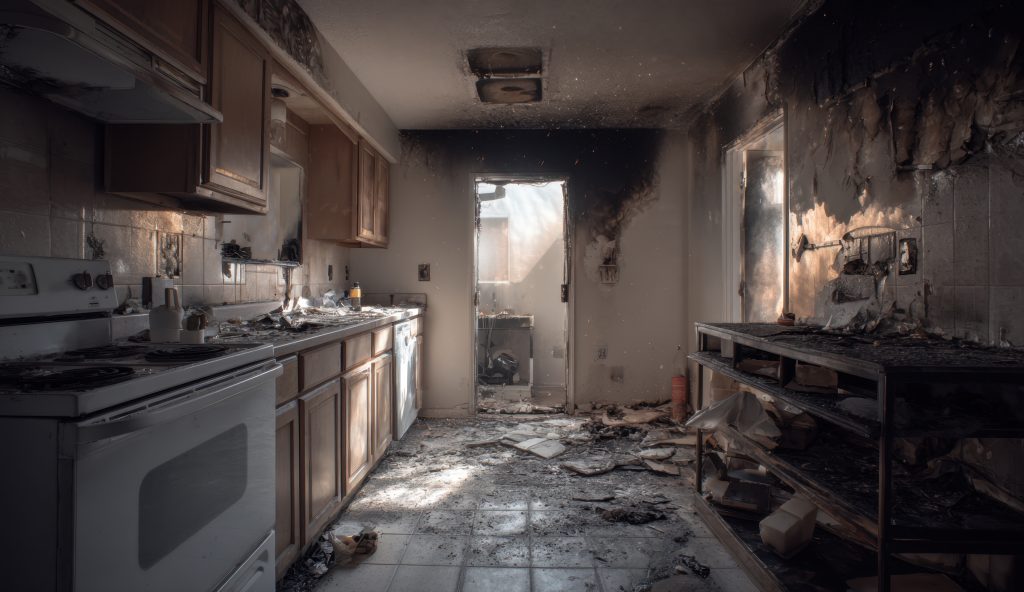
Fire damage can be one of the most distressing experiences for a homeowner. Even small fires can cause significant damage, not just from flames, but from smoke, soot, and water used to extinguish the fire.
Knowing what to do in the early stages — and understanding what happens next — can help you take control of the situation and begin the recovery process with confidence.
1. Ensure the Property is Safe
Before entering the property, safety must be the priority.
Do not re-enter until you have been told it is safe by the fire service or relevant authority. Structural damage, electrical risks, and hidden hazards may still be present.
Even after access is allowed, take care when moving through the property and avoid disturbed areas.
2. Contact Your Insurance Company
Notify your insurer as soon as possible.
They will log your claim and may appoint a loss adjustor to assess the damage. In some cases, they may also arrange emergency works to secure the property.
Providing clear details early on helps ensure the process starts quickly and correctly.
3. Secure the Property
After a fire, properties are often left exposed.
This can include:
- Broken windows or doors
- Damaged roofing
- Open access points
Temporary measures such as boarding up or securing entry points may be required to protect the property from further damage or unauthorised access.
4. Document the Damage
If it is safe to do so, record the condition of the property.
Take photos and videos of:
- Fire-damaged areas
- Smoke and soot spread
- Damaged belongings
Avoid disposing of items unless necessary or approved by your insurer, as they may need to be assessed as part of the claim.
5. Understand the Impact of Smoke and Soot
Damage is not always limited to the area where the fire occurred.
Smoke and soot can travel throughout the property, affecting walls, ceilings, furniture, and ventilation systems.
This often means that cleaning and restoration work is more extensive than expected, even in rooms that appear untouched.
6. Cleaning and Restoration Process
Fire damage restoration is a specialist process and typically includes:
Removal of debris and damaged materials
Deep cleaning of surfaces affected by smoke and soot
Odour removal treatments
Drying from any water used to extinguish the fire
Professional handling is essential to ensure the property is safe, clean, and fully restored.
7. Repair and Reinstatement
Once cleaning and preparation are complete, reinstatement works can begin.
This may involve:
Rebuilding damaged areas
Replacing fixtures and fittings
Redecoration and finishing
The goal is to return the property to its pre-loss condition, in line with your insurance policy.
What to Expect from the Process
The process following fire damage is often more involved than many people expect.
There are multiple stages, including inspection, cleaning, and repair, and each must be completed thoroughly before the next begins.
Working with experienced professionals ensures the damage is properly assessed and the restoration is carried out to the correct standard.
Final Thoughts
Fire damage can feel overwhelming, but taking the right steps early and understanding the process can make a significant difference.
With the right support and a clear approach, your property can be safely restored and returned to its original condition.
If you’ve experienced fire damage and need guidance, speaking to a specialist early can help you understand the next steps and avoid unnecessary delays.